Home Is a Moving Target: The Timeless American Ache at the Heart of Oz
Something strange happens every time a new generation discovers Oz. The yellow brick road doesn't look dated. The scarecrow doesn't feel dusty. Dorothy's desperation to get back to Kansas — a flat, gray, tornado-prone state that most people would probably leave without a second thought — hits just as hard in 2024 as it did in 1939. That's not nostalgia doing the heavy lifting. That's something deeper, something woven into the American psyche itself.
So what exactly is it? And what does it mean that a new film is heading down that road right now, at this particular moment in the country's story?
The Displacement Machine
At its core, Oz is a story about being somewhere you don't belong and aching to get back to somewhere you do. That premise sounds simple. It is anything but.
America has always been a nation of people in transit — immigrants arriving on new shores, families moving west, generations relocating for work, communities scattered by economic upheaval or natural disaster. The concept of "home" in this country has never been entirely stable. It's aspirational as much as it is geographical. You don't just live somewhere in America; you're always, in some sense, trying to find where you're supposed to be.
Dorothy taps directly into that nerve. She lands in a spectacular, colorful, genuinely astonishing place — and all she wants is to go back to a farm in Kansas. That choice is the whole story. Not the witches, not the wizard, not the emerald towers. The choice to return to ordinary life when extraordinary life is right there for the taking. That tension is profoundly American, and it never gets old because the tension never resolves at the cultural level. We're still arguing about it.
What 1939 Needed vs. What 2024 Needs
The MGM film arrived during the tail end of the Great Depression, when Americans were genuinely displaced — financially, emotionally, geographically. Families had been uprooted by the Dust Bowl. The economy had chewed through a decade of stability. "There's no place like home" wasn't a warm sentiment in 1939; it was a desperate prayer.
Fast-forward to now. The displacement looks different but feels surprisingly similar. Remote work has untethered millions of people from the cities they built their lives around. Social media has created communities that exist everywhere and nowhere simultaneously. The pandemic reshuffled where people live, work, and find meaning in ways that are still sorting themselves out. A 2023 Gallup survey found that nearly 40% of Americans said they didn't feel a strong sense of belonging to their local community — a number that would have seemed staggering a generation ago.
Dorothy's problem, it turns out, is everyone's problem right now. She's not lost in a fantastical sense. She's lost in the modern sense — surrounded by noise and color and movement, completely uncertain of where she actually fits.
The Self-Discovery Loop
Here's the other piece of the puzzle that keeps Oz culturally immortal: the story doesn't just ask where you belong. It asks who you are.
The Scarecrow thinks he has no brain. The Tin Man believes he has no heart. The Lion is convinced he lacks courage. Every single one of them is wrong. The journey to Oz doesn't give them anything they didn't already possess — it just forces them to discover it. That's not a children's story. That's a psychological framework that therapists have been describing for decades.
In an era defined by identity — by questions about who we are, what we stand for, and what kind of person we want to become — that framework lands differently than it did when the film was first released. It lands harder, maybe. The companions' struggles feel less like fairy-tale obstacles and more like recognizable internal battles. The Cowardly Lion isn't a funny side character in 2024. He's a mirror.
Why Constant Reinterpretation Is the Point
Not every classic story survives endless retelling. Some grow brittle with age, or they become so culturally specific that newer audiences can't find a foothold. Oz doesn't have that problem because Baum's original architecture was almost accidentally perfect for reinvention.
The Land of Oz is visually malleable — it can be rendered in any aesthetic language, from the hand-painted Technicolor of 1939 to the dark, angular interpretations of later decades. The characters are archetypes rather than fully realized individuals, which means every new production can fill them with whatever specific humanity the moment calls for. And the central quest — get home, find yourself — is so elemental that it resists being pinned to any single era.
That's the structural secret. Oz isn't a story about the 1900s or the 1930s or any particular decade. It's a story about a feeling. Feelings don't expire.
Where This Film Steps In
The Dorothy of Oz film project isn't arriving in a vacuum. It's stepping into a cultural moment where questions about belonging, identity, and the meaning of home are genuinely urgent in ways that feel less abstract than they did even ten years ago.
The production team has been vocal about wanting to honor the emotional truth of Baum's world while finding the specific frequencies that resonate with a contemporary audience. That's not a reboot strategy — that's a recognition that Oz has always been a living text, one that asks each generation to bring its own anxieties and hopes to the yellow brick road.
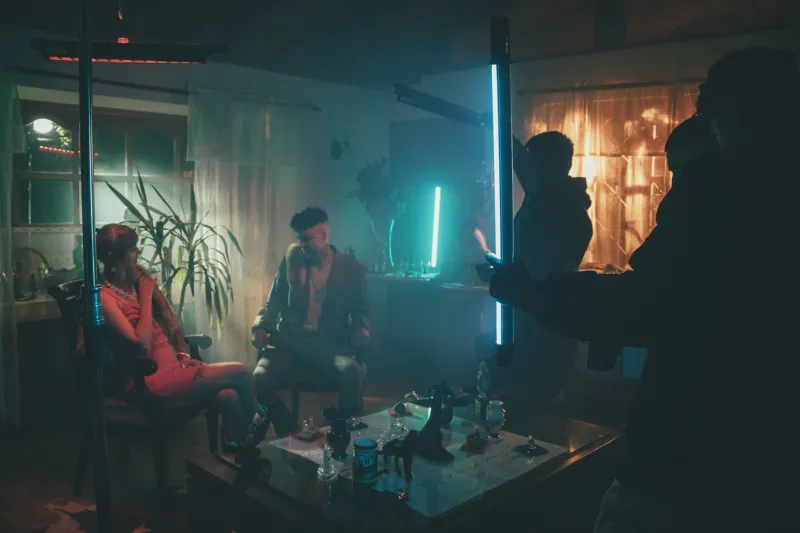
What makes this adaptation particularly interesting from a production standpoint is the conscious effort to let the story breathe differently. The world being built for this film isn't just a visual update. It's an emotional recalibration — a version of Oz that acknowledges how much more complicated the concept of "home" has become, and how much more the journey of self-discovery costs when the world keeps shifting underneath your feet.
The Road Still Goes Somewhere
America keeps returning to Oz because America keeps needing to. The story holds a mirror up to something the country hasn't figured out yet — maybe never will. The desire to belong somewhere real, to know yourself clearly, to find courage when fear is the more reasonable response. These aren't solved problems. They're permanent conditions.
What a well-made Oz adaptation can do — what this film has the opportunity to do — is give that permanent condition a temporary shape. Something you can sit with in a darkened theater, feel the weight of, and carry home with you afterward.
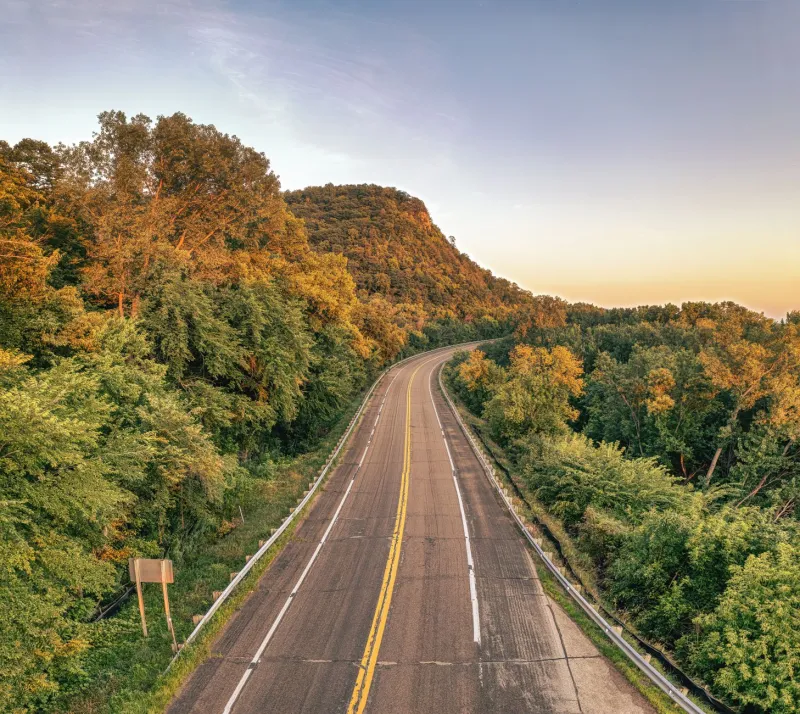
And maybe that's the most American thing about Oz of all. The destination isn't the point. It never was. It's the road, and what you find out about yourself while you're walking it.
The yellow brick road is still under construction. Stay with us.