Brains, Heart, and Nerve: Why Dorothy's Companions Are Actually the Soul of Oz
Here's a question worth sitting with for a minute: when you picture Oz, what do you see first? Chances are it's not Dorothy standing alone on that yellow brick road. It's the four of them — the girl from Kansas flanked by a stuffed man with no thoughts, a hollow man with no feelings, and a big cat with no guts. Together. That image has been burned into the American imagination for over eighty years, and it didn't happen by accident.
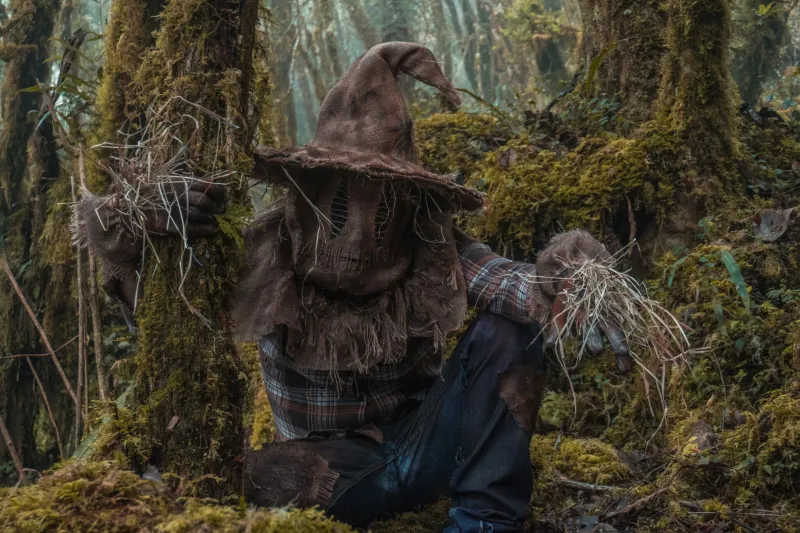
The Scarecrow, the Tin Man, and the Cowardly Lion are officially Dorothy's traveling companions. In practice, they're something closer to the emotional engine of the entire story. And as production on Dorothy of Oz: The Movie moves forward, the question of how to balance Dorothy's journey with the very different — but equally powerful — arcs of her three friends is one of the most creatively charged decisions the filmmakers face.
The Genius of the Three-Part Mirror
L. Frank Baum wasn't writing a psychology textbook when he dreamed up these characters, but he stumbled onto something that reads like one. Each companion carries a wound that isn't really physical. The Scarecrow believes he can't think. The Tin Man believes he can't feel. The Lion believes he can't be brave. And here's the twist that every kid who's ever watched the 1939 film eventually figures out on their own: they're wrong about themselves the whole time.
That dramatic irony is the secret weapon. Audiences know before the characters do that the Scarecrow is clever, that the Tin Man is tender, that the Lion is capable of extraordinary courage when it counts. Watching them slowly discover what we already see is genuinely moving — not because the story tricks us, but because it holds up a mirror to the way most of us walk around underestimating ourselves every single day.
That's not a fairy tale problem. That's a Tuesday morning problem. And it's why these characters have never really gone out of style.
Each Generation Gets the Version It Needs
What's fascinating is how the three companions shift in cultural weight depending on when you're watching. During the original film's release in 1939, America was crawling out of the Depression and staring down the barrel of another world war. The Lion's crisis of courage — the fear of not measuring up when the moment demands everything — hit differently for a country being asked to send its sons overseas. The Tin Man's longing for emotional connection resonated in an era when men weren't exactly encouraged to talk about feelings. And the Scarecrow? In a decade when economic collapse had left millions questioning their own worth and capability, a character who turns out to be brilliant all along carried real comfort.
Fast-forward to now, and the anxieties have shuffled but haven't disappeared. We live in an age of information overload where people feel simultaneously drowning in data and starved for actual wisdom — the Scarecrow's dilemma reframed for the algorithm era. Emotional numbness, burnout, and the creeping sense of disconnection from other people make the Tin Man's quest for a functioning heart feel startlingly current. And the Lion's particular brand of fear — knowing what you should do, wanting to do it, but freezing anyway — maps almost perfectly onto the anxiety epidemic that's been quietly reshaping American life for the last two decades.
Every generation doesn't just enjoy these characters. They need them in a specific way.
The Sidekick Problem Hollywood Keeps Getting Wrong
Here's where things get tricky from a filmmaking standpoint. The word "sidekick" carries baggage. In Hollywood shorthand, sidekicks exist to support the protagonist, provide comic relief, and occasionally sacrifice themselves to make the hero's emotional journey land harder. They are, by definition, secondary.
But that framework breaks down completely when you apply it to Oz. The Scarecrow, Tin Man, and Lion aren't supporting Dorothy's story — they're running parallel stories of their own that happen to intersect with hers. Their quests are as emotionally complete as anything Dorothy experiences. And in adaptation after adaptation, when filmmakers treat them as mere accessories to Dorothy's arc, something essential drains out of the whole enterprise.
The 1939 MGM classic understood this intuitively, even if the production was chaotic. Ray Bolger, Bert Lahr, and Jack Haley weren't playing second fiddle — they were given room to be fully realized, and audiences responded accordingly. Decades later, the Broadway musical Wicked essentially proved the point from the opposite direction: take the Oz mythology and center it on characters other than Dorothy, and you still get something that resonates deeply, because this world was always bigger than one person's journey home.
What This Means for the New Film
For Dorothy of Oz: The Movie, the opportunity here is enormous — and so is the responsibility. Modern audiences are sophisticated. They can spot a token sidekick from a mile away, and they don't forgive it the way they might have in earlier decades. If the Scarecrow, Tin Man, and Lion are going to land with the emotional force the story demands, they need to be treated as co-leads in everything but the title.
That means giving each of them genuine dramatic stakes that exist independently of Dorothy's journey. It means letting their self-doubt feel real rather than played for laughs. It means trusting audiences to track four emotional arcs simultaneously — which, frankly, any viewer who's made it through the first season of a prestige streaming drama can handle without breaking a sweat.
It also means casting choices that go beyond surface-level charm. The actors stepping into these roles need to be able to carry scenes, not just react to them. The Tin Man's longing has to feel like actual longing. The Lion's fear has to feel like actual fear. The Scarecrow's dawning self-awareness has to feel earned, not announced.
The Real Yellow Brick Road
There's a reason the yellow brick road is a shared path and not a solo sprint. Baum understood something about the American experience that still holds true: we don't figure ourselves out in isolation. We figure ourselves out in company, through friction and loyalty and the strange alchemy of traveling with people who are also, quietly, trying to become who they're supposed to be.
Dorothy needs to get home. But the Scarecrow, Tin Man, and Lion need something too — something that turns out to be inside them all along. That's not a subplot. That's the whole story.
And if Dorothy of Oz: The Movie gets that right, it won't just be a great adaptation. It'll be the one that finally gives these three their due.